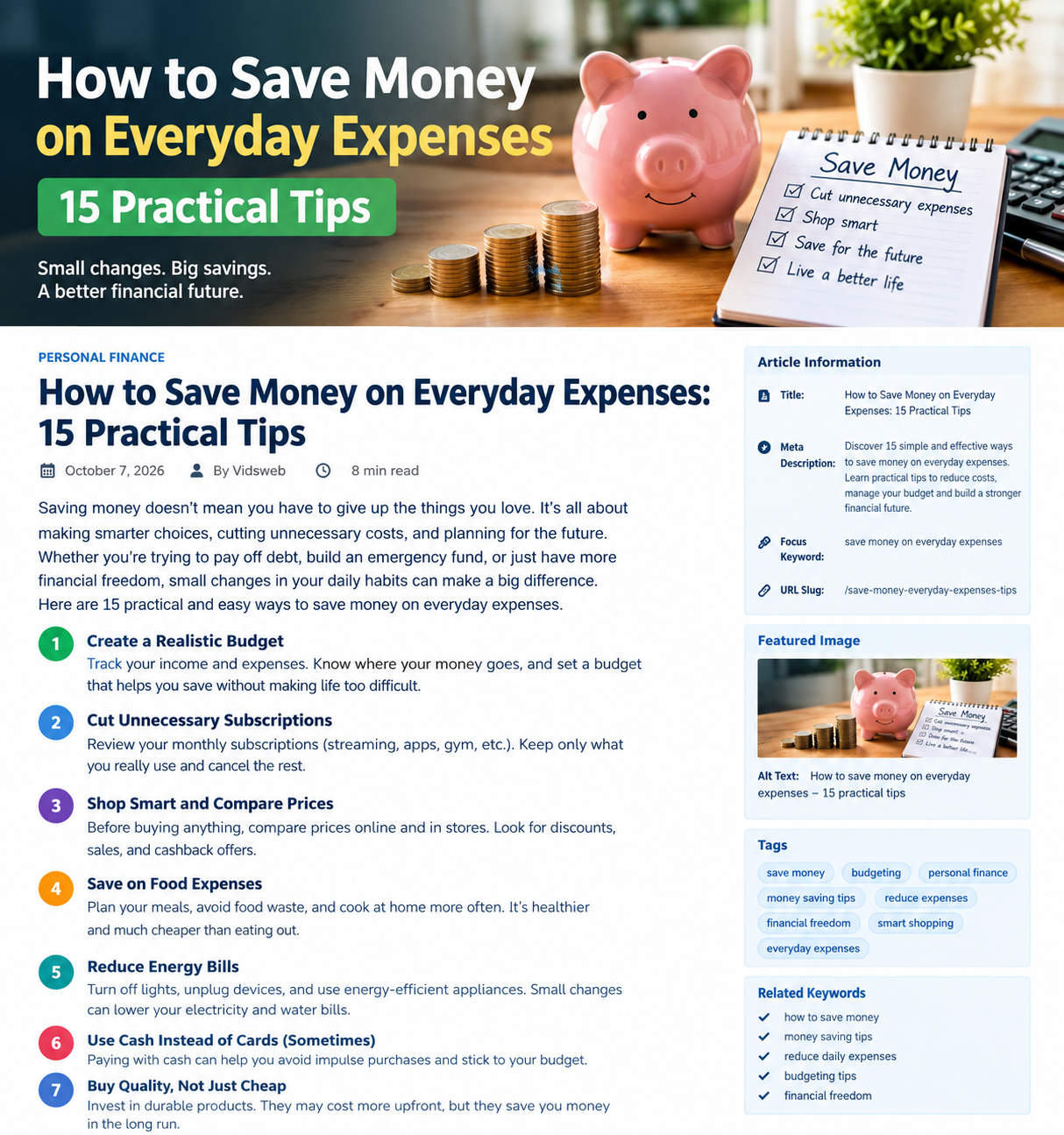
How to Save Money on Everyday Expenses: 15 Practical Tips
Saving money does not always require major lifestyle changes. In many cases, small improvements in your daily spending habits can make a noticeable difference over time.
Whether you want to build an emergency fund, reduce unnecessary spending, pay off debt, or simply have more money left at the end of the month, controlling everyday expenses is a good place to start.
Here are 15 practical ways to save money without making your daily life unnecessarily difficult.
1. Create a Realistic Budget
The first step toward saving money is understanding where your money goes.
Write down your monthly income and regular expenses, including housing, food, transportation, utilities, subscriptions, and other spending. A realistic budget makes it easier to identify areas where you can cut costs.
2. Track Your Daily Spending
Small purchases can add up quickly.
For a month, keep track of everything you spend, including snacks, drinks, online purchases, and other small expenses. At the end of the month, review the list and identify spending that could have been avoided.
3. Cancel Unused Subscriptions
Check your monthly subscriptions for streaming services, apps, memberships, cloud storage, and other services.
If you rarely use a subscription, consider cancelling it. Even saving $10 or $20 per month can add up to significant savings over a year.
4. Compare Prices Before Buying
Do not automatically buy the first product you find.
Compare prices from different stores and websites before making larger purchases. Look for legitimate discounts, seasonal sales, and promotional offers.
However, remember that the cheapest option is not always the best value.
5. Plan Your Meals
Food is one of the easiest areas where households can reduce unnecessary spending.
Planning meals before shopping can help you avoid buying items you do not need. Cooking at home more often can also reduce the amount spent on restaurants and takeout.
6. Reduce Food Waste
Try to use the food you already have before buying more.
Store food properly, check expiration dates, and plan meals around ingredients that need to be used soon. Reducing waste means getting more value from the money you have already spent.
7. Reduce Energy Consumption
Small changes around the home can help lower utility bills.
Turn off lights when they are not needed, unplug devices that are rarely used, and use energy-efficient appliances when replacing old equipment.
8. Avoid Impulse Purchases
Before buying something you did not plan to purchase, stop and ask yourself whether you really need it.
For expensive items, consider waiting 24 hours before making the purchase. This simple habit can prevent many unnecessary purchases.
9. Use a Shopping List
Going shopping without a plan can make it easier to spend more than expected.
Prepare a list before visiting a store and try to stick to it. This is particularly useful when buying groceries.
10. Buy Durable Products
A very cheap product is not always the cheapest option in the long run.
When appropriate, choose products that are durable and likely to last longer. Paying slightly more for quality can sometimes reduce the need for frequent replacements.
11. Use Free Alternatives
Many services have free alternatives.
For example, you may be able to use free educational resources, public libraries, free software, or free entertainment options instead of paying for every service.
The goal is not to eliminate all paid services but to avoid paying when a suitable free option is available.
12. Review Your Transportation Costs
Transportation can take a significant portion of a monthly budget.
When practical, combine multiple errands into one trip, use public transportation, walk for short distances, or share rides. Regular vehicle maintenance can also help prevent expensive repairs.
13. Set a Specific Savings Goal
Saving money becomes easier when you have a clear purpose.
Instead of simply saying, “I want to save more,” set a specific target. For example, you might aim to build an emergency fund or save a certain amount for a future purchase.
14. Automate Your Savings
If possible, transfer a fixed amount into your savings account whenever you receive your income.
Automating savings can make saving a regular habit rather than something you only do when money is left over at the end of the month.
15. Review Your Budget Every Month
Your expenses can change over time.
At the end of each month, review your budget and compare your planned spending with your actual spending. Adjust the next month’s budget based on what you learned.
Final Thoughts
Saving money is usually about consistency rather than making one huge change.
Start with a few simple habits, such as tracking your spending, reducing unnecessary subscriptions, planning meals, comparing prices, and setting a regular savings goal.
Even small savings can become meaningful when you maintain them consistently over months and years.
Disclaimer: This article provides general personal-finance information for educational purposes. Individual financial circumstances vary, so consider your own situation before making financial decisions.